
THIERRY FAZIAN: THE FRAGMENT AS LANGUAGE
Fazian
APRIL 03, 2026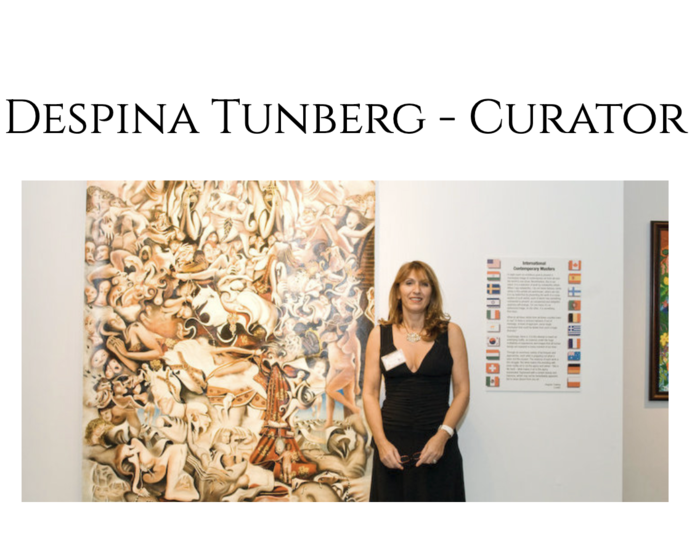
A Curatorial Review by Despina Tunberg
Thierry Phazian, known professionally as Fazian, is a Paris-based interdisciplinary artist whose
practice constitutes one of the more genuinely ambitious attempts in contemporary mixed media
to fuse heterogeneous cultural registers — Afro-Caribbean mysticism, European fine art
tradition, digital technology, science fiction cosmology, and the physical vernacular of found and
recovered objects — into a coherent visual language. The site describes this as hybridization; the
work earns the term.
In his current plastic approach, Fazian combines with precision in his creations all contemporary
mixed techniques based in particular on the principle of the fragment in art — centered on the
association of heterogeneous elements — in order to create a new language or a new work. He
works with computer-edited images that he integrates into a visual work and also from recovered
objects. The word "precision" here is important and not merely promotional: the hybrid paintings
demonstrate a compositional intelligence that holds together materials of radically different
origin — acrylic paint, relief-built surfaces, digital imagery embedded in or printed onto physical
substrates, found objects, resin, metal — without the whole dissolving into noise. Each element
retains its material identity while participating in an argument larger than itself.
The Hybrid Paintings portfolio is where this synthesis is most fully on display. Biosphere
encloses an entire ecological proposition in a compressed relief: acrylic ground, built
dimensional surface, found matter, the whole suggesting both a living ecosystem and its
imperiled condition. Cosmic Totem extends to a tall vertical format — a totem in the literal
sense, a stacked accumulation of forms and materials that reads as both ancestral object and
contemporary construction, as if the traditional and the posthuman had been pressed into the
same column. Orange Vortex (acrylic on convex metal) takes the physical properties of its
support — convex metal that returns the viewer's own reflection — as an active compositional
element, making the vortex include the space in front of the work.
The work that most directly expresses the practice's conceptual ambition is Exoplanet, which the
artist describes as: In a green and golden field, the Earth-oracle in crystalline resin converses
with two cosmic female figures, between yoga, constellation, and star-water bearer. The
crystalline resin Earth-oracle embedded in the surface introduces a literal transparency — the
viewer can see into the work as well as across it — while the description places the image in a
mythological-cosmic frame that is neither Western nor African nor Caribbean but deliberately
synthesizes all three. This is the governing ambition across the practice: not the appropriation of
traditions but their genuine transformation through contact.
The Homo Cybernetics and Homo Electronicus works bring the cosmic orientation down to the
human body's relationship with technology: the artist reveals hidden poetry in digital fragments
— a human pulse within circuits, where a cyber-tribal foot rises from a blue ocean of memory.
The "cyber-tribal" compound is exact — it names the specific fusion Fazian is pursuing, where
the tribal form of the totem or the body-marked figure meets the circuitry and fragmentation of
digital existence.Signs & Crop Circles demonstrates the formal confidence the practice is capable of
at full extension: a golden silhouette marked with cosmic tattoos, holding an agate sphere. Around her,
blazing reliefs and geometries trace the mystery binding Earth to the cosmos. The integration of
actual agate — a natural stone with its own optical properties, its own geological history — into
the painted and relief surface is characteristic: Fazian consistently insists on the physical reality
of his materials as part of the meaning, resisting the tendency of hybrid art to become merely
referential.
The installation Imagine City — a panoramic miniature civilization constructed from hundreds of
fragments of metal, wood, dust, and found matter — extends the fragmentation principle into
architectural and social territory: between ruins and future, it fuses metal, wood, and light,
reviving within the dust the dream of a world reborn from its remains. The installation sits within
a long tradition of urban ruination as artistic subject — from German Expressionism through
Arte Povera to contemporary assemblage — but the specifically Caribbean and African cultural
inflection gives it a different frame of reference than the European versions of that tradition.
For collectors seeking work at the intersection of material and conceptual ambition, grounded in
a specific and unusual cultural synthesis, Fazian's practice offers genuine distinction.
Despina Tunberg Curator
World Wide Art Books and Artavita
Wwab.us and artavita.com
https://www.facebook.com/despina.tunberg.9
https://www.linkedin.com/in/despina-tunberg-0b872b22/